
Frecciarossa and Italo link Florence and Venice in as little as 2 hours 5 minutes — arriving not at a road, but at the head of the Grand Canal, over the same 1846 causeway that first gave Venice a fixed connection to dry land.
Before operators and classes, it's worth settling the bigger question. Venice makes this an unusually easy call: no airline sells a direct flight on this route, in-town parking simply doesn't exist, and however you arrive on the mainland, the last stretch is on foot or by boat anyway.
| Train✓ Best overall | Plane | Coach / Bus | Car | |
|---|---|---|---|---|
| City centre to city centre | 2h 5m–2h 20m, Santa Maria Novella to Santa Lucia direct | No direct flights on this route — a connection would take half a day or more | ~3.5–4 hrs to Piazzale Roma | ~2.5–3 hrs to Mestre or the Tronchetto car park, traffic dependent |
| Typical fare | Advance fares from around €19.90 one-way | Not offered on this city pair | Usually a little cheaper than the train, from around €15–25 | Fuel, autostrada tolls and Venice's mainland parking garages — no fixed fare |
| Where you arrive | Santa Lucia — steps from the Grand Canal | N/A | Piazzale Roma, the edge of the old town, same as where cars must stop | A mainland garage or Tronchetto car park, then on foot or by vaporetto like everyone else |
| Comfort | Full-size seat, room to walk around, table, reliable WiFi | N/A | Reclining seat, no room to move, a rest stop partway | Comfortable, but you're driving the entire way for the same walk-in ending |
| CO₂ per passenger | Lowest of the options, by a wide margin | N/A | Low, comparable to the train | High if you're travelling alone |
| Reliability | Very reliable; the Bologna–Padova stretch is conventional track, so allow a little buffer | N/A | Subject to road traffic and roadworks | Entirely dependent on traffic conditions |
No airline runs a scheduled service between Florence and Venice — the two cities are close enough, and the train fast enough, that flying was never worth building.
The Florence to Venice train runs 204 km from Firenze Santa Maria Novella north through Bologna and the Padua plain, before crossing the lagoon on a 3.6 km rail causeway into Venezia Santa Lucia. Both Trenitalia and Italo cover it in as little as 2 hours 5 minutes, with around 36 combined departures a day requiring no change of train.
Unlike the fully dedicated high-speed line further south to Rome, this route is a tale of two tracks: the Florence–Bologna section runs almost entirely through tunnel — 73.8 km of the line's 78.5 km, including the Vaglia Tunnel, Italy's longest railway tunnel at 18.7 km — while Bologna to Padova to Venice continues on upgraded but conventional track, which is why the fastest journey time sits a little above what the trains' 300 km/h top speed would suggest.
The scenery follows the same two-track split: the Tuscany hills around Florence give way to tunnel darkness through the Apennines, then open onto the flat Po Valley plain and the Veneto region before the final stretch of open water into the lagoon — worth a window seat if you catch it in daylight.
The final approach hasn't changed much since 1846: modern Frecciarossa and Italo trainsets still ride the same causeway alignment across the lagoon that first gave Venice a fixed link to the mainland, decades before any road followed. It's a striking contrast with the Apennine crossing further back, a 2009 engineering project that replaced a slow mountain climb with 35 minutes of tunnel at speed.
Bologna Centrale, roughly the route's midpoint, is also worth knowing about even if you're going straight through — it's a same-platform connection point if your trip continues on to Milan, Rome or the Adriatic coast, and a reasonable place to break the journey if you want to see a third city along the way.
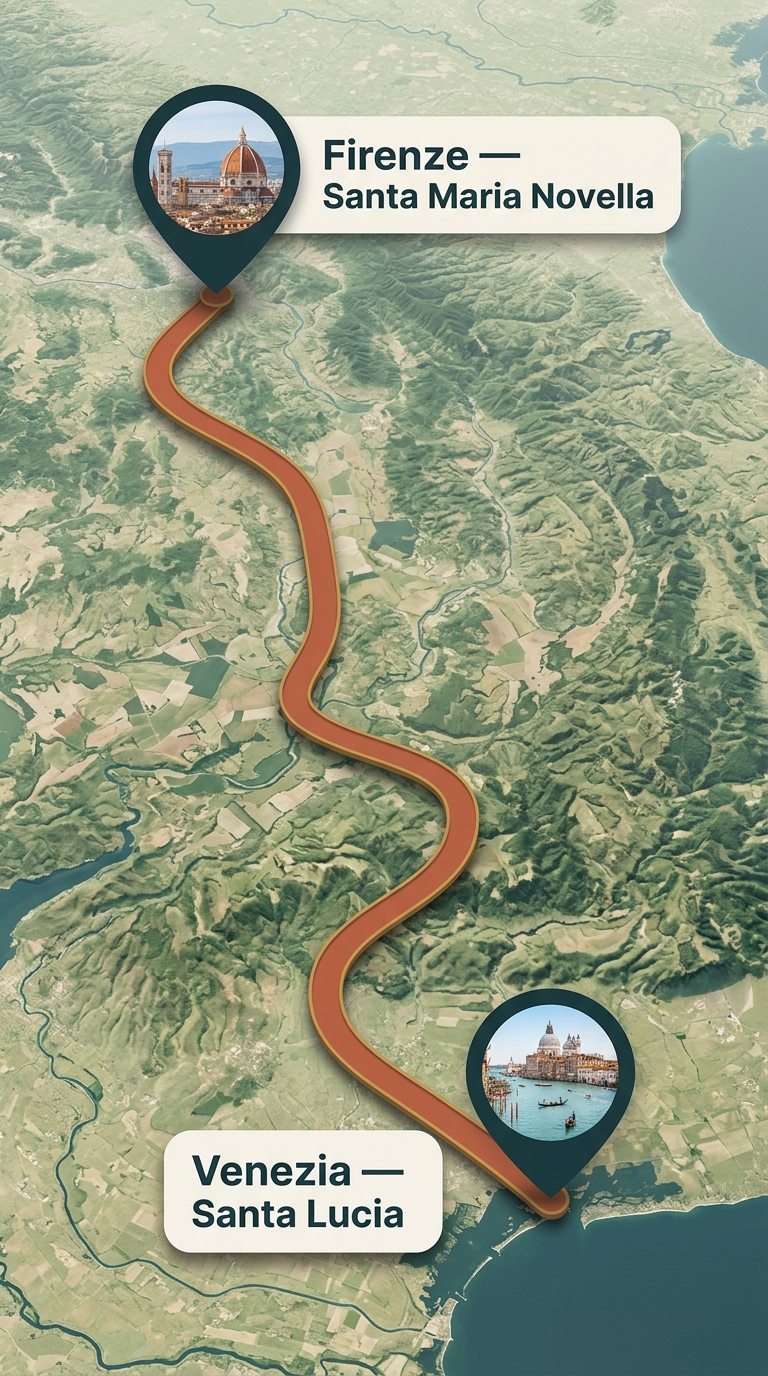
Each city has a main terminus and a secondary stop worth knowing — most Frecciarossa and Italo trains call at both, so picking a station comes down to where you're actually staying.
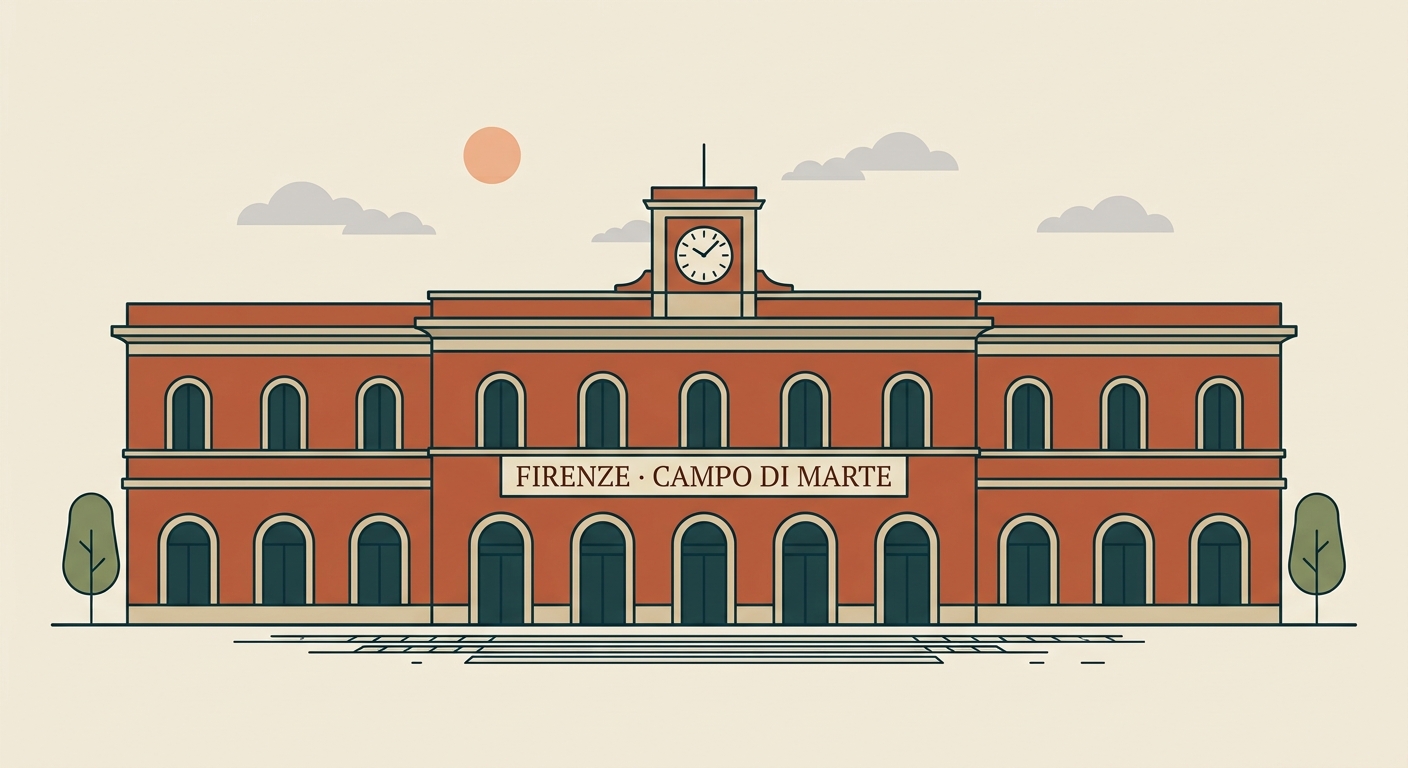
Santa Maria Novella is Florence's central terminus, a 10-minute walk from the Duomo and the city's main hub for Frecciarossa, Frecciargento and Italo services alike. Campo di Marte, on the eastern edge of the city, is a secondary stop some trains call at a few minutes earlier or later on the same route — useful if it happens to sit closer to where you're staying, though most travelers have no reason to use it over Santa Maria Novella.
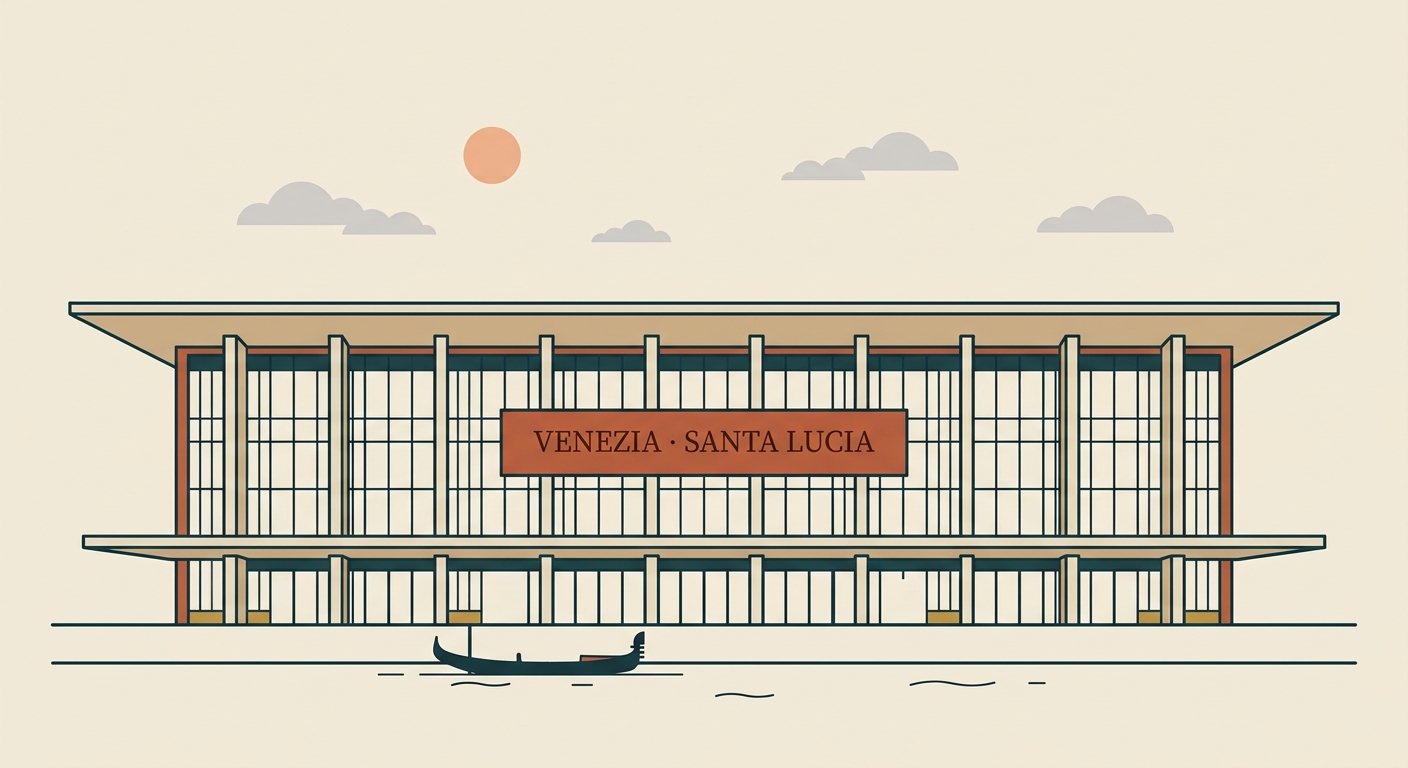
Santa Lucia is the only station inside historic Venice, its front steps opening directly onto the Grand Canal — the last stop after the train crosses the 1846 causeway over the open lagoon. Mestre, on the mainland just before that crossing, is where some services stop first; it's a normal, unremarkable railway town, worth remembering mainly so you don't get off a stop too early and end up looking for a vaporetto that isn't there, since nothing but the mainline connects it back to the historic center.
Trenitalia and Italo both build these into every fare on this route, from entry-level Standard and Smart on up — check the search widget above for what's added at each higher class.

Included in every class on both operators, even the entry-level Standard and Smart fares.

Keep a phone or laptop charged for the full 2h 5m ride, in any class.

Every seat gets one — enough room for a laptop or a plate from the bar car.

Snacks and drinks throughout the ride; Business/Executive tiers add complimentary at-seat food.

Overhead and end-of-carriage space for a carry-on or a large suitcase either way — useful, since Venice has no porters or luggage trolleys once you leave the station.

Located at the end of each car on both Frecciarossa and Italo trainsets.

Available in every class on Italo, and typically enforced in Trenitalia's Standard carriages too.

Every fare comes with an assigned seat, so there's no need to board early to claim one.
Frecciarossa and Italo keep luggage rules simple — there's no official size or weight limit, just realistic space to plan around.
This independent guide exists to help you pick the right train, not to push you toward one operator over another — the itinerary above and the fare comparisons throughout are built from the same checks any traveler would run before booking.
We're not owned by Trenitalia or Italo — every option on this route, including driving and flying, is covered honestly.
Bookings are handled by High-Speed Trains, an established independent rail-ticketing service.
Payment and personal details are handled entirely by the operator's own secure checkout.
Santa Lucia vs. Mestre, acqua alta season, luggage rules — the details that actually affect your trip.
Super Economy and Smart fares are released 90-120 days out and sell out first on weekends and holidays — booking a week or more ahead usually beats a walk-up price by half.
Every fare includes a reserved seat regardless of class — the upgrade mainly buys extra legroom and a quieter cabin on what's usually just a two-hour ride.
Combined Frecciarossa and Italo departures run roughly 6:50am to 9pm most days — arrive a little early, since platform numbers aren't posted until close to departure.
Everything about times, fares, stations and the causeway's history — the short version.
Frecciarossa and Italo cover the 204 km route in as little as 2 hours 5 minutes. Most direct services call at Bologna Centrale and Padova along the way, but no change of train is required.
It's 204 km (about 127 miles) from Firenze Santa Maria Novella to Venezia Santa Lucia — north through Bologna and the Padua plain, then across the 1846 rail causeway into the lagoon.
Trains depart from Firenze Santa Maria Novella and arrive at Venezia Santa Lucia, the island station at the head of the Grand Canal. Some services also stop at Venezia Mestre on the mainland — only get off there if your hotel is actually in Mestre.
Both operators release their lowest fares 90-120 days ahead: Trenitalia's Super Economy and Italo's Smart fares start from around €19.90-24.90 one way. Prices rise steadily as the departure date approaches.
Yes. Around 36 combined Frecciarossa and Italo departures run each day with no change of train, though most call at Bologna and/or Padova en route.
No. At around two hours, the trip is far too short for Italy to run a sleeper service on this corridor. Early-morning and late-evening departures cover most schedules instead.
Trenitalia's Frecciarossa runs more frequently — about 25 daily departures versus Italo's 11 — while Italo (NTV) often prices €5-10 cheaper. Compare both for your exact date in the search widget above.
On a roughly two-hour journey the upgrade matters less than on a longer trip — extra seat width and at-seat service are pleasant, but Standard or Smart Economy is comfortable for most travelers.
Both Trenitalia and Italo release their cheapest fares 90-120 days before travel, rising steadily as the departure date nears and seats fill.
For nearly every traveler, yes. No airline flies this route directly, and Venice's historic center has no roads at all — arrive by car and you still park at Piazzale Roma or the Tronchetto and continue on foot or by vaporetto, exactly where the train already drops you.
Eurail and Interrail passes are accepted, but Frecciarossa and Italo high-speed services still require a separate seat reservation on top of the pass, so a pass rarely saves money on a single Florence to Venice trip.
Yes. Both Firenze Santa Maria Novella and Venezia Santa Lucia have staffed or self-service luggage storage, useful if you're doing the round trip as a single day out.
Both operators offer compensation for delays over 60 minutes, claimable through the operator's app or website using your ticket number.
The line runs year-round. Easter, summer (June-August) and Christmas sell out advance fares fastest; if you're arriving in autumn or winter, it's worth checking Venice's acqua alta (high tide) forecast before you plan your first hours in the city.
Frecciarossa and Italo both allow folded bikes as standard luggage. A full-size bike usually needs a dedicated space booked in advance and isn't guaranteed on every service.
Compare Trenitalia and Italo times and fares in one search, then book directly with our booking partner.
Search trains now